The Department of Physics commenced its academic journey in 2014 with the introduction of the M.Sc. programme and has since evolved into a dynamic centre for teaching and research. Equipped with modern laboratories and supported by a team of experienced and highly qualified faculty members, the Department provides a stimulating environment for academic excellence and scientific inquiry.
In 2019, the Department proudly launched its Ph.D. programme, offering scholars an opportunity to undertake advanced research and contribute to scientific innovation. To enhance the academic and professional growth of students, the Department regularly organizes workshops, seminars, conferences, and guest lectures. Graduates of the Department have successfully secured positions in public and professional sectors across a wide range of disciplines.
In response to the increasing demand for research and innovation in the field of basic sciences, the Department has introduced a 5-Year Integrated B.Sc.-M.Sc. Programme in Physics. The programme is designed to inspire students to pursue higher studies in basic sciences and contribute meaningfully to the advancement of Indian science.
Additionally, the Department offers an optional Add-On Programme in Semiconductor Technology for postgraduate students of the University Teaching Departments (UTDs). This specialized programme equips students with industry-relevant knowledge and provides a significant competitive advantage in the rapidly expanding semiconductor sector.
From Undergraduate to Ph.D. — A Complete Academic Journey
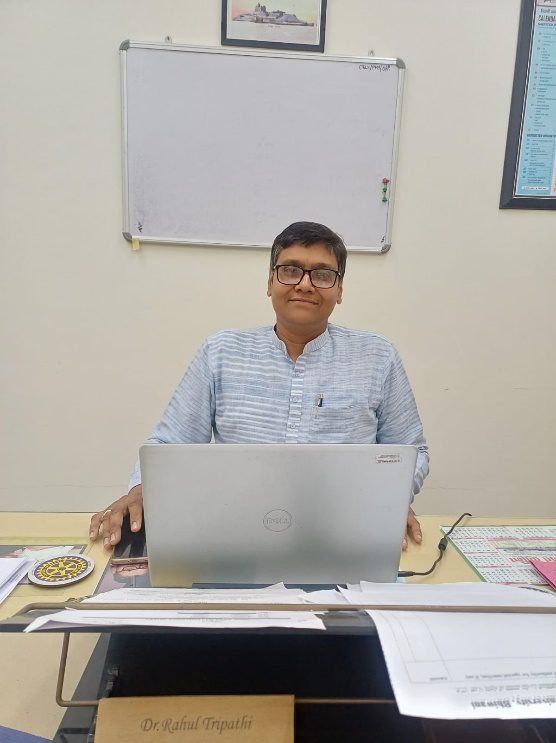
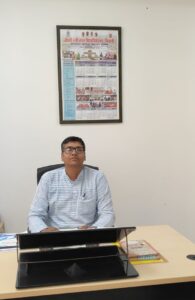 Welcome to the Department of Physics, where knowledge, innovation, and scientific curiosity come together to shape future scholars and researchers. Situated in a rural area, our Department is dedicated to providing quality education and research opportunities to students from diverse backgrounds. With committed faculty members, modern laboratories, and a stimulating academic environment, we strive to nurture scientific temper, critical thinking, and innovation. We encourage our students to explore the fascinating world of physics and contribute meaningfully to science and society. I warmly invite aspiring students to join us in this journey of learning, discovery, and excellence.









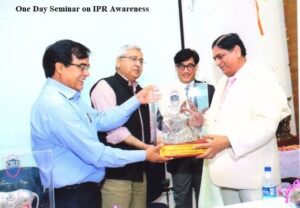
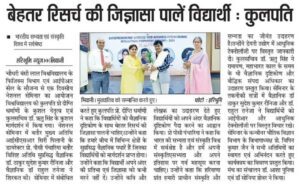
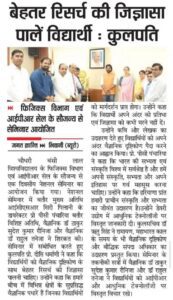
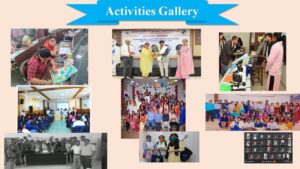
- Event:One Day Seminar on IPR Awareness Sponsored by HSCS&T., Date: 24th March 2017
- Event: Quiz Competition on “AkshayUrjaDiwas”., Date: 20th August 2021
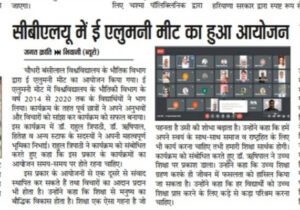
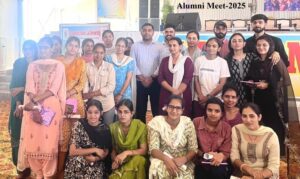
- Event: E-Alumni meet, Date: 4th September 2021
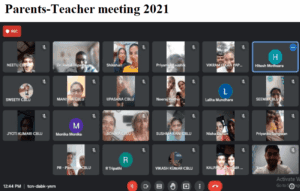
- Event: Parents-Teacher meeting, Date: 5th September 2021
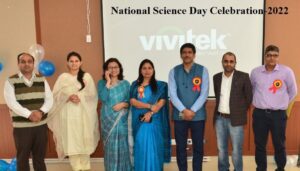
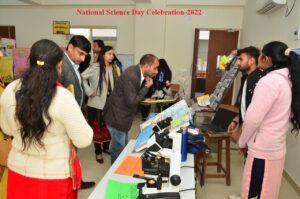
- Event: National Science Day Celebration-2022, Date: 28thFebruary 2022
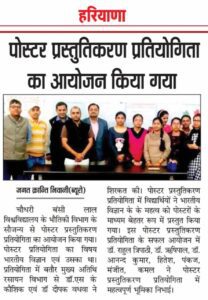
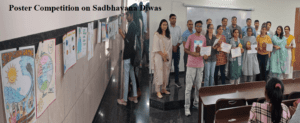
- Event:Poster Competition on “SadbhavanaDiwas”., Date: 24th August 2023
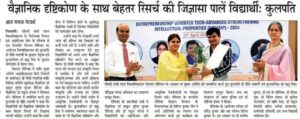
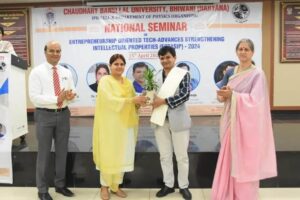
- Event:National Seminar on “Entrepreneurship Oriented Tech Advances Strengthening Intellectual Properties (EOTASIP)-2024 Sponsored by HSCS&T, Date:15th April 2024.
- Event: International Workshop on Learning Science with Fun: A Way Forward Towards Experiential Learning, Date: 3-4thFebruary 2025
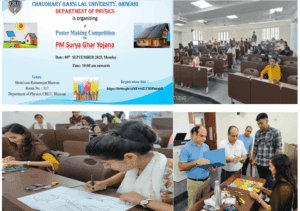
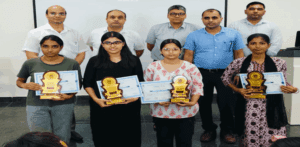
- Event: Poster Competition on “PM Surya Ghar (Muft bijli Yojana), Date: 08th September 2025
| Instruments | Description | |
| High temperature Tube Furnace, High temperature Muffle Furnace | A High Furnace is used for heat treatment, calcination, annealing, sintering, and material synthesis under controlled atmospheric conditions. | 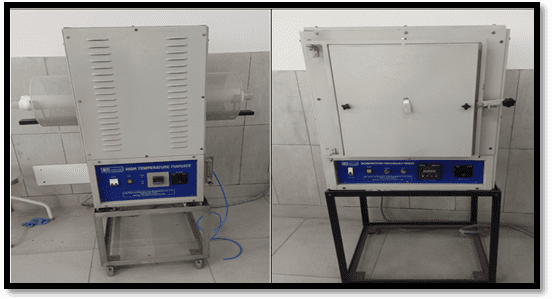 |
| High Pressure Reactor | A High Pressure Reactor is a sealed reaction system designed to perform chemical reactions under high pressure and temperature conditions. It is extensively used in catalysis, hydrothermal synthesis, hydrogenation, and electrochemical research. The reactor is equipped with pressure gauges, temperature controllers, safety valves, and stirring mechanisms for controlled experimentation. | 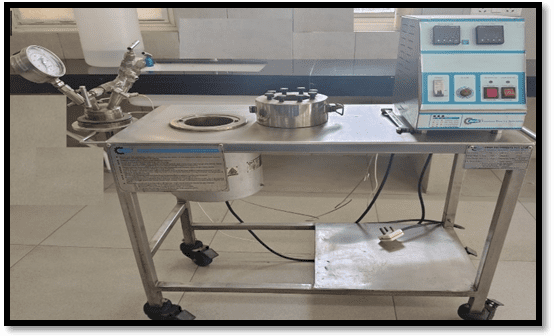 |
| Potentiostat/Galvanostat/EIS/ZRA | An electrochemical workstation used to study electrochemical properties and corrosion behavior of materials. It combines multiple techniques including Potentiostat, Galvanostat, Electrochemical Impedance Spectroscopy (EIS), and Zero Resistance Ammeter (ZRA) measurements. | 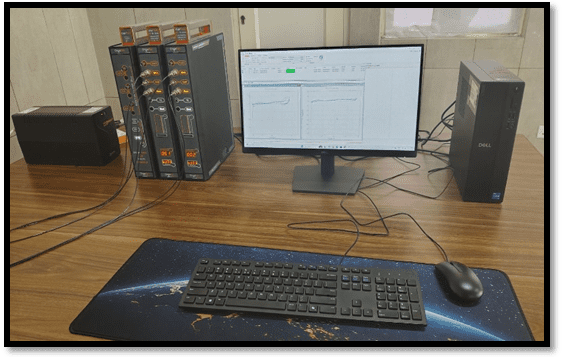 |
| UV-Vis spectrometer | A UV–Visible Spectrometer is an analytical instrument used to measure the absorption or transmission of ultraviolet and visible light by a sample. It is widely used for qualitative and quantitative analysis in chemistry, physics, materials science, and biological sciences. | 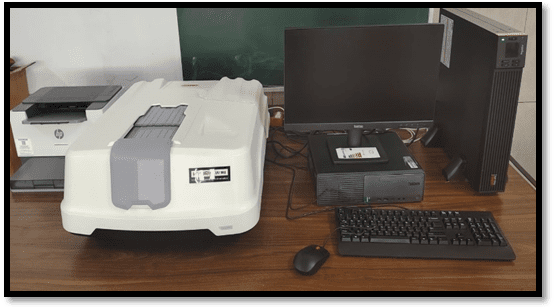 |
| Thin Film deposition (E- beam and Thermal Deposition) | The physics department houses a dual source thin film deposition suite comprising a high-vacuum E-beam evaporator and a thermal evaporation unit, enabling precise deposition of metals, oxides and organic materials. The integrated system supports controlled substrate heating, in situ thickness monitoring and rotating sample holder for uniform film growth and reproducible thin-film fabrication for research. | 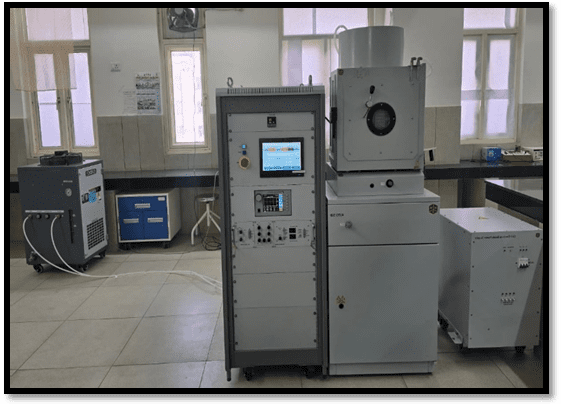 |
| Miscellaneous | Ultrasonic Bath, Weighing Balance, Magnetic and Geared Stirrers Oven, Centrifuge, autoclave | 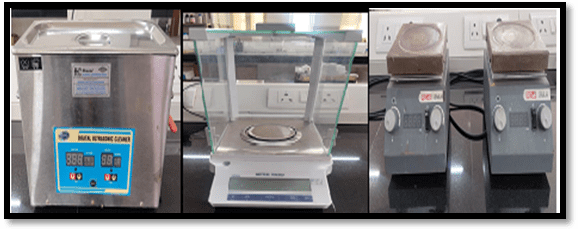 |
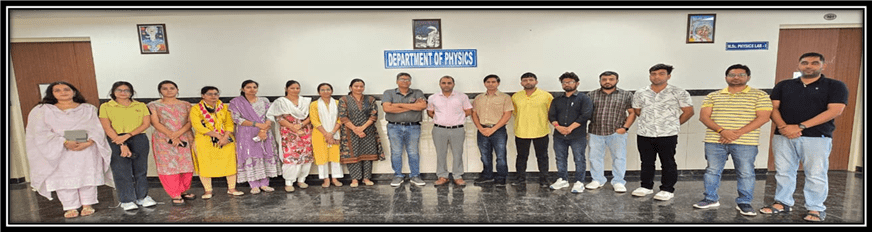 | |
| Computational Physics Our research group is investigating the physical properties of a novel quaternary Heusler alloy (QHA) for next-generation devices. Traditional semiconductor electronics face increasing challenges related to power dissipation, miniaturization limits, and processing speed. Spintronics offers an innovative solution to this problem by employing the electronic spin as an additional degree of freedom. Spintronics involves utilizing both the spin and charge of electrons to process and store information in advanced devices. The ability to manipulate spin enables more efficient devices with faster processing speeds and reduced power consumption. Among many materials being investigated for spintronic applications, quaternary Heusler alloys stand out as promising candidates due to their versatile electronic and magnetic properties. All the calculations have been performed using an ab initio approach based on density functional theory (DFT) by utilizing the full potential linearized augmented plane wave (FP-LAPW) method as implemented in the ELK code, alongside the pseudopotential-based Quantum Espresso code. Through this approach, we explore new frontiers in the integration of spintronics devices. | 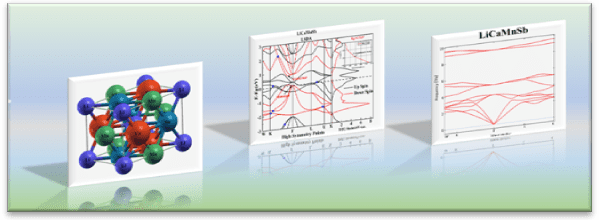 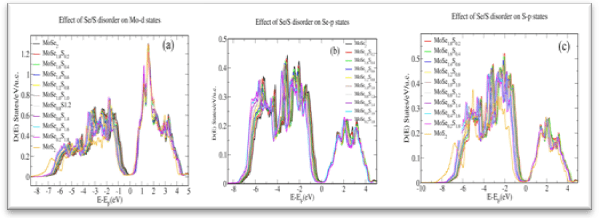 |
| Supercapacitors and Hydrogen Energy Storage Our research focuses on developing advanced materials for *supercapacitors* and the *hydrogen evolution reaction (HER)*. We design nanostructured electrode materials to improve energy storage performance, including high power density and long cycle life. In HER studies, we work on efficient and low-cost electrocatalysts for sustainable hydrogen production. This work contributes to clean energy technologies and next-generation energy storage solutions. | 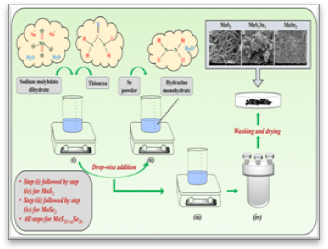 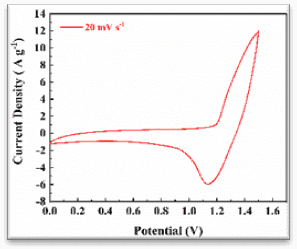 |
| Glasses Our group is actively working on rare-earth-substituted glasses owing to their unique spectroscopic properties, including sharp emission bands, long fluorescence lifetimes, and high color purity. We have synthesized and investigated a series of Dy³⁺, Sm³⁺, and Eu³⁺ doped borate and borosilicate glasses to study their optical and luminescence properties, such as optical band gap, bonding parameters, and CIE color coordinates. The tunable emission behavior of these materials makes them promising candidates for advanced optoelectronic applications, including white LEDs, optical fiber amplifiers, and laser devices. | 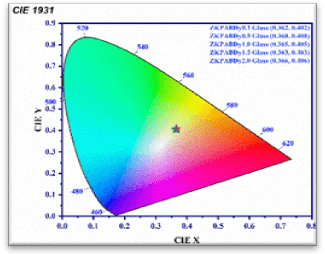 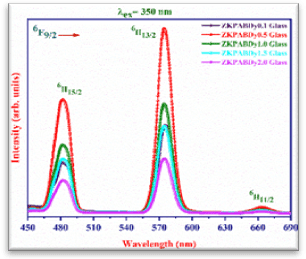 |
| Thin Films Recently, our group has expanded its research activities into the field of thin films, with a focus on antibacterial metal-oxide coatings on biocompatible substrates. This research aims to inhibit microbial colonization while maintaining excellent cytocompatibility. The work combines advanced thin-film deposition and surface-engineering techniques with in vitro antimicrobial and biocompatibility studies to develop safe, durable, and long-lasting antimicrobial surfaces for medical and healthcare applications. | |
| Former Ph.D. Students | 1. Dr. Vijay 2. Dr. Manjeet 3. Dr. Pardeep |
| Current Ph.D. Students registered | 1. Ms. Pooja 2. Mr. Pankaj 3. Ms. Priti 4. Mr. Karamvir 5. Mr. Ashwani |
| Ph.D. Students pursuing Pre-Ph.D. Course work | 1. Mrs. Pooja Sharma 2. Mrs. Ruchika 3. Mr. Narender 4. Mrs. Jyoti 5. Mrs. Upasana 6. Mrs. Monika 7. Ms. Kalpana |
- NAAC DATA 2019-2024
- AAA 2019-24
- ATR 2019-24
Notification regarding re-constitute of the facilities of Physical Sciences
M.Sc. physics time table session 2022-23
Time table 5year integrated M.Sc. physics
Time Table dual degree B.Sc.(Hons.)- M.Sc. Physics